
CybertronIT Blog
Cybertron Blog
Cybertron has been serving the Wichita area since 1997, providing IT Support such as technical helpdesk support, computer support, and consulting to small and medium-sized businesses.


Here is a year-end frustration we hear a lot. There is money left in the IT budget, and the rush is on to spend every cent before it gets clawed back and handed to another department next year. The instinct makes sense, and it leads to bad buys. Never spend on IT just to hit a number. Spend it where it actually earns something back. If you have budget to use before the clock runs out, here is where it does the most good.
0 Comments

The scariest breaches are the quiet ones. An attacker phishes one employee's username and password, logs in, and walks straight into your network with no alarms going off, because as far as the system can tell, it is that employee. The single highest-impact fix for this is multi-factor authentication. Turning it on does more to lower your risk, for less money and effort, than almost anything else you can do. Here is how to roll it out, from good to best.

A slow network is one of those problems that quietly taxes everything. Pages crawl, files take forever, calls drop, and at a busy stretch like the holidays, a network that buckles under the extra load costs you real sales. The good news is that most network slowdowns come down to a handful of fixable causes. Here are five worth checking.
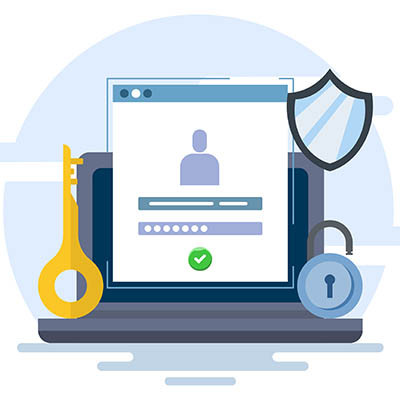
Passwords are still the front door to most of your business data, and a weak one undoes a lot of other protection. The trouble is that people make passwords convenient for themselves, which usually means convenient for attackers too. Here is what actually makes a password strong, and how to build ones you can live with.

A team can put in long hours, push hard, and still end the week roughly where it started. Effort is not the same as progress. If the work does not move the business forward, the energy spent on it counts for very little. So the question worth asking is not how busy your people are. It is how much of that effort actually turns into results, and what is quietly draining the rest.

Have you stopped to wonder whether the voice on the phone is a person or an AI? You will be asking that a lot more often. Agentic AI takes the weakest part of your security, the human trust that a familiar voice, face, or login is genuine, and lets attackers fake it convincingly and at scale. The old gut check of "that sounds like my boss" no longer holds.

A buried inbox is more than annoying. It slows you down, hides the messages that matter, and makes you look less on top of things than you are. The good news is that the tools you already use, Gmail and Outlook, have built-in features that do most of the sorting for you. A few minutes setting them up buys back time every single day. Here is where to start.
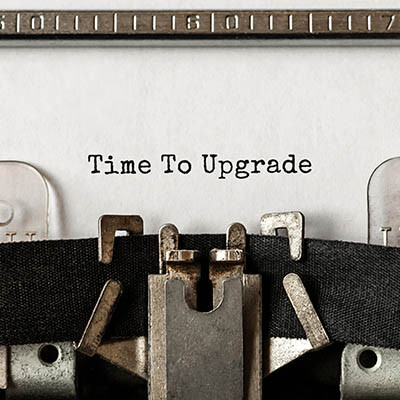
You have heard "if it ain't broke, don't fix it," and for a lot of things that is fine advice. For IT, it can be the expensive kind of wrong. Technology that still turns on every morning can quietly be one of the biggest risks in your business, because "still working" and "still safe to rely on" are not the same thing. Here is why holding onto old systems too long catches up with you.
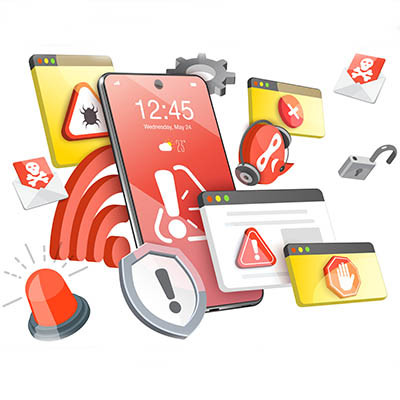
Most security budgets go to things you can control directly, firewalls, encryption, detection and response. Those matter, but the biggest factor in whether you get breached is your people. It takes one wrong click to put your whole network at risk, and even careful, well meaning employees can open the door under the right pressure. Here is why the human side is where security is won or lost, and what to do about it.

While you are busy shoring up your cybersecurity, it is worth asking what you are doing about the physical side. The risk to your people, your data, and your equipment is real, and the line between physical security and IT has mostly disappeared. Cameras, badge readers, and door controllers all run on your network now, which means they are your problem too. Here is what a modern setup includes and how to handle it.
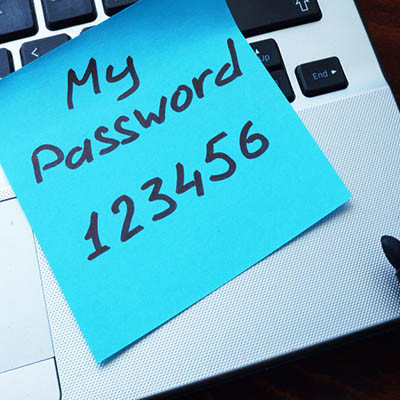
How many of your employees keep company passwords on sticky notes stuck to their monitors? It looks harmless, but anyone walking through the office can read them, including people who should not. Worse, the sticky note is a symptom of a deeper problem in how your business handles passwords. Here is why it happens and the system that actually fixes it.

Technology runs your business, so the choices you make about it matter. One of the most expensive mistakes is staying attached to a system because of what you already put into it, long after it stopped serving you. That instinct has a name, the sunk cost fallacy, and it quietly costs companies a lot. Here is how it works and how to decide better.

Clutter builds up everywhere, the junk drawer at home, the back of a closet, and your business network. On a network that clutter has a name, digital cruft, and it is more dangerous than it sounds. All the leftover accounts, unused software, and forgotten data piling up as a side effect of running a business may be your single biggest vulnerability. Here is what it is and why attackers love it.

The most common complaint about generative AI is that it hallucinates, meaning it makes things up and states them with total confidence. That makes it risky for work where being wrong has consequences. You cannot eliminate the problem, but you can cut it down a lot with how you prompt. Here are a few habits that produce more reliable output.

Smart office technology, connected lighting, thermostats, sensors, cameras, can make a workspace more efficient and more modern. It also quietly changes your risk. Every one of those devices is a small computer on your network, and most of them were not built with security as the priority. You do not have to choose between modern and secure, but you do have to add this tech on purpose. Here is what to watch and how to do it right.

Technology does not last forever, so what happens when a monitor or a computer finally dies? The easy move is to toss it in the trash. That is the worst option you have. Old electronics carry both value and risk, and how you get rid of them matters more than most businesses think. Here is the right way to retire old tech, for your wallet, your data, and the environment.
Remote and hybrid work are not a passing trend anymore. They are how a lot of businesses operate now, and for good reason. Hybrid in particular, a mix of in-office and remote, gives you flexibility and a wider talent pool. But it only works if your IT can carry it. Get the technology right and hybrid is a real advantage. Get it wrong and it is a steady source of risk. Here is the honest version of both.

From the old Nigerian prince scam to a polished fake invoice, phishing email is a constant threat to every business. The cost is not just a little money. One successful phishing attack can shut down operations, expose sensitive data, and in the worst cases take a company down. The good news is that most phishing has tells. Here is how to spot them.

Everybody knows cut, copy, and paste. Those are table stakes. The shortcuts below are the next tier, the ones that quietly save a few seconds hundreds of times a day until the time really adds up. None of them take more than a minute to learn. Here are eight worth committing to memory on Windows.

Forget the old picture of a hacker, a lone kid in a hoodie breaking in for the thrill. That image is dead. Cybercrime is a sophisticated global industry now, and by one widely cited estimate from Cybersecurity Ventures it costs the world around 10.5 trillion dollars a year as of 2025. Understanding how that industry actually works is the first step to defending against it.

© 2026 CybertronIT. All rights reserved.Privacy Policy · Sitemap