
CybertronIT Blog
Cybertron Blog
Cybertron has been serving the Wichita area since 1997, providing IT Support such as technical helpdesk support, computer support, and consulting to small and medium-sized businesses.

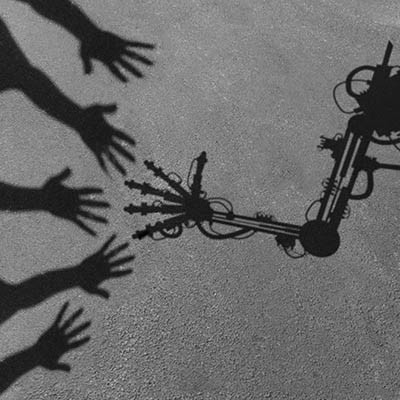
The question is no longer whether to use AI. Everyone is. The real question is what happens when you trust it blindly. We have watched companies treat AI as set-it-and-forget-it and then call us for emergency cleanup. Here are the main pitfalls of over-trusting AI and how to keep your business out of the cautionary-tale column.
The black-box accountability gap
A big risk is losing explainability. When an AI makes a high-stakes call, rejecting a loan or flagging a threat, and nobody on your team can explain why, you are exposed. In a regulated industry, the AI said so is not a legal defense. Lean toward explainable AI, and if you cannot trace the logic, do not trust the output for high-stakes decisions.
Hallucinations and the package attack
Generative AI is confident even when it is dead wrong, and that has moved from a quirk to a security problem. Models sometimes suggest code packages that do not exist, and attackers now do slopsquatting, a term coined by security researcher Seth Larson, registering malicious packages under those exact hallucinated names and waiting for developers to install them. Never push AI-generated code or content to production without a human in the loop.
The decay of critical thinking
Gartner predicts that through 2026, the atrophy of critical-thinking skills from heavy generative-AI use will push 50% of organizations to require AI-free skills assessments. When staff lean on AI to draft every email, summarize every meeting, and solve every glitch, they lose the instinct to notice when the AI is steering them off a cliff. Treat AI like a junior assistant whose work you check, not an oracle.
Data leaks and hidden costs
Paste sensitive data into a public AI tool and you may be leaking trade secrets into a model that serves them back to someone else. A private AI setup keeps your data sandboxed inside your own perimeter. And do not assume AI instantly slashes costs, the sticker price is the tip of the iceberg, with much of the real spend coming after rollout, data cleaning, performance that drifts as conditions change, and cloud and GPU scaling.
AI is a powerful efficiency tool, but it has no intuition, empathy, or accountability. The goal is to capture its productivity without surrendering the human judgment that built your business. Book a call and we will help you use AI safely, with the right guardrails.
0 Comments

A backup you have never restored from is not a backup. It is a hope. The green checkmark in your dashboard only tells you the job ran last night. It says nothing about whether the data inside is any good, whether it still covers everything that matters, or whether you could actually get your business running again from it. We do not call a backup good until we have restored a full system from it, and we run that test on our own equipment, not just for clients.

For years the patching rhythm was simple. A vendor released fixes, you applied them on a monthly cycle, and that was good enough. It is not anymore. Attackers now use AI to take a brand-new patch apart and build a working exploit in hours instead of weeks, which means the gap between a fix being released and your systems actually having it is the window they walk through. A once-a-month patch routine is starting to look less like diligence and more like an open door.

Your point-of-sale system is not just where you take payment. It is where sales, inventory, customer data, and daily operations all meet, which means when it gets neglected it quietly turns into the thing slowing your business down. These are the five POS and IT problems we see hitting businesses in 2026.

Every business runs on technology now, whether you are a creative agency, a law firm, or a retailer. The moment a machine throws up the blue screen or a server quietly falls over, the clock starts running against your revenue. That is when remote IT support stops being a convenience and becomes the thing that keeps your day from falling apart.

If you keep dates in a spreadsheet and want to know what day of the week each one falls on, you do not have to look them up one at a time. One formula handles the whole column. The spreadsheet is probably the most underused tool on most desks, and this is one of those small tricks that saves real time once you know it.

If your technology only gets attention when something breaks, it is a cost center, and cost centers do not help you grow. The businesses that scale cleanly treat IT as strategy, not as a line item to dread. The catch is that most small and mid-sized businesses cannot justify a full-time technology executive. That is exactly the gap a virtual CIO fills.

Part of our job in IT is to worry so you do not have to, and the good news heading into 2026 is that a lot of what used to keep us up at night simply does not anymore. Better automation, smarter monitoring, and mature cloud tools have quietly killed off some of the manual, soul-draining work that used to define IT support. Here are five of them.

The biggest weakness in most networks is not the firewall. It is the people, and attackers know it. They count on your team being busy, stressed, and trying to be helpful, so they manufacture moments where someone clicks first and thinks later. The fix is almost embarrassingly simple. Give people permission to slow down. Call it the three-second rule, a short pause before acting on any message that wants something from you. Here is why that tiny habit punches so far above its weight.
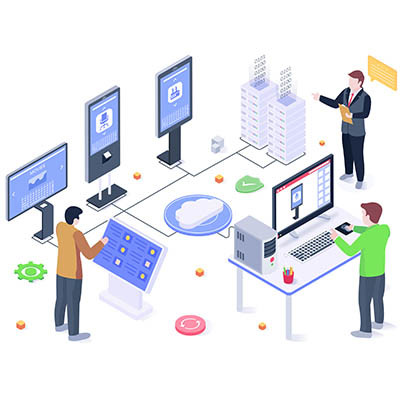
Take a walk through your office and look at the screens on the walls. If they are showing a generic weather widget, a Happy Monday slide that has been up for three weeks, or a No Signal box, you do not have a technology investment. You have an expensive screensaver. A lot of businesses put screens up because the lobby looked bare or someone suggested it, and then nobody gives them another thought. Done right, those screens should be doing real work.
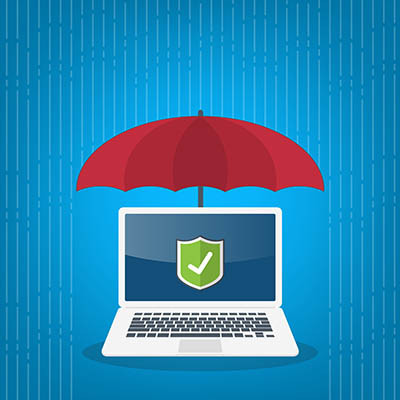
Cyber insurance feels like a safety net right up until a claim gets denied, and denials happen more than most owners expect. Put yourself in the insurer's seat. They are not eager to pay out for damage that simple, well-known precautions would have prevented. So they have started requiring a baseline of security controls, and if you do not have them, or you said you did and you did not, your payout can vanish at the exact moment you need it. Here are the three that come up most.
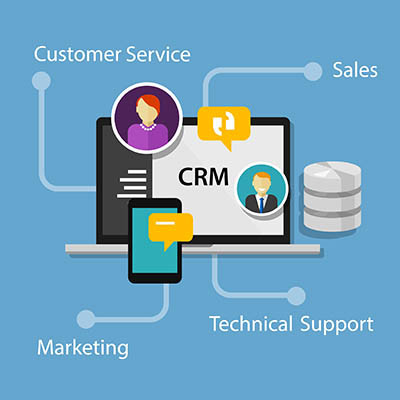
Is your business still running customer relationships on a patchwork of spreadsheets, sticky notes, and somebody's inbox? It feels cheaper than buying software, but it is not. That setup quietly piles up organizational debt, and the bill comes due as dropped follow-ups, forgotten details, and sales that slip away without anyone noticing. The fix is a customer relationship management system, a CRM. Here are three things it does that the patchwork never will.
Security used to be simple. Lock the server room, pick a password better than "admin," and hope. That world is gone. The attacks that actually hit businesses now go through people, not firewalls, which means your strongest defense in 2026 is a team that knows what to watch for. Software still matters, but software alone is a liability. Here is where the human side of security needs your attention this year.

Business technology can gallop away from you. SaaS subscriptions, cloud bills, hardware, and maintenance fees pile up quietly, and the waste is bigger than most owners realize. Flexera's research puts wasted cloud spend at around a quarter of the total, and roughly a third of SaaS licenses go completely unused. The good news is that most of this comes back without giving up anything you actually need. Here are five places to look.

You can have every security tool on the market and still get breached through one tired click. People are where most attacks land, which makes training your team one of the highest-return security moves you can make. The catch is that the way most businesses do it, a once-a-year video everyone clicks through on mute, changes almost nothing. Here is how to build training that actually shifts behavior.

Most businesses have one. That crusty, critical application the whole operation depends on, sitting on an old platform the vendor abandoned years ago. You cannot patch it, and you cannot rip it out overnight, so it sits there as a blinking security hole in the middle of your network. The good news is you do not have to replace it tomorrow to make it safe. You contain it. Here is how.

Few industries have changed as completely as the automobile over the last twenty-five years. The car went from a mostly mechanical machine to a connected, software-driven computer you happen to sit inside. It is a fun story on its own, and it also rhymes with what has happened to the technology running your business. Here are the shifts that got us here.

Good IT matters everywhere, even at a certain very busy operation up north. So in the spirit of the season, here is a short tale from the North Pole IT department, and the very real lesson hiding inside it.

Cyberthreats are not occasional events anymore. They are constant, automated, and often sophisticated, which means a business that only reacts to attacks lives in permanent damage control. Waiting until something breaks to think about security is the most expensive plan there is. Getting ahead of it is the only approach that actually holds. Here is what waiting really costs, and what getting ahead looks like.

Think about where your IT time actually goes. For most businesses, the large majority of it is spent just keeping things running, patching, fixing, putting out fires, with only a sliver left for the projects that actually move the business forward. If you want to grow, that ratio has to flip, and the good news is that flipping it is simpler than it sounds.

© 2026 CybertronIT. All rights reserved.Privacy Policy · Sitemap